
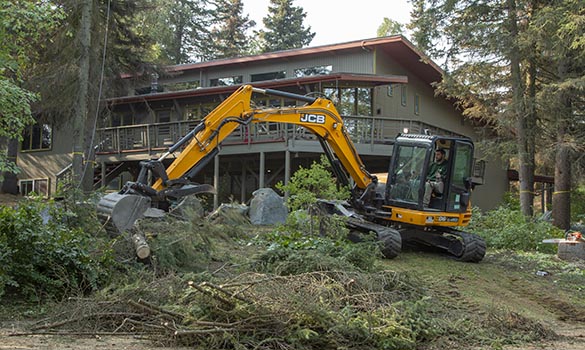
Every building project in West Michigan starts the same way: something has to come off the land before anything goes on it. Whether that's a brushy quarter-acre behind a Kentwood ranch or ten timbered acres ahead of a commercial pad, the work between "wooded" and "buildable" is its own trade — with its own equipment, its own permits, and pricing that confuses everyone the first time they bid a project.
This guide walks the whole process: what clearing and site prep actually include, how residential and commercial jobs differ, what the work costs in 2026, and the Michigan environmental rules that can stop a project that skipped its homework.
What land clearing and site prep include
"Clearing" on an honest bid is a stack of distinct tasks — and knowing them is how you compare quotes that otherwise look wildly different:
- Vegetation and brush removal — undergrowth, saplings, invasives (buckthorn and autumn olive rule West Michigan fencerows), mowed or mulched in place.
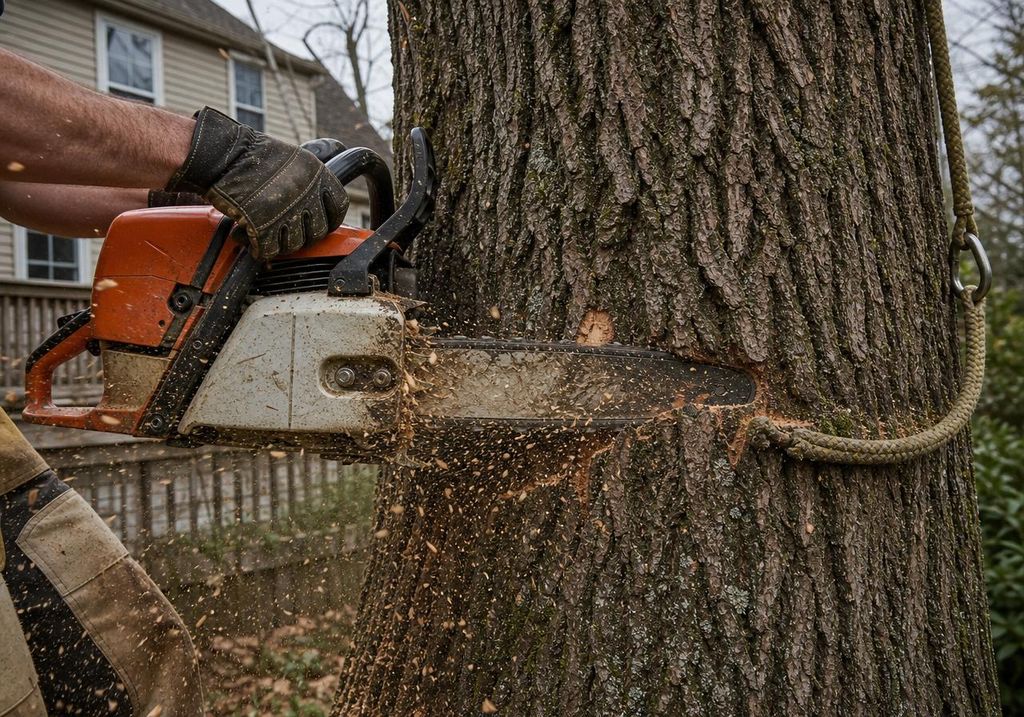
- Tree felling and removal — everything from selective takes to full canopy, with merchantable logs sorted from chip wood.
- Stump grinding or grubbing — ground below grade for lawns and landscapes, or fully grubbed out where foundations, drives, and utilities are going.
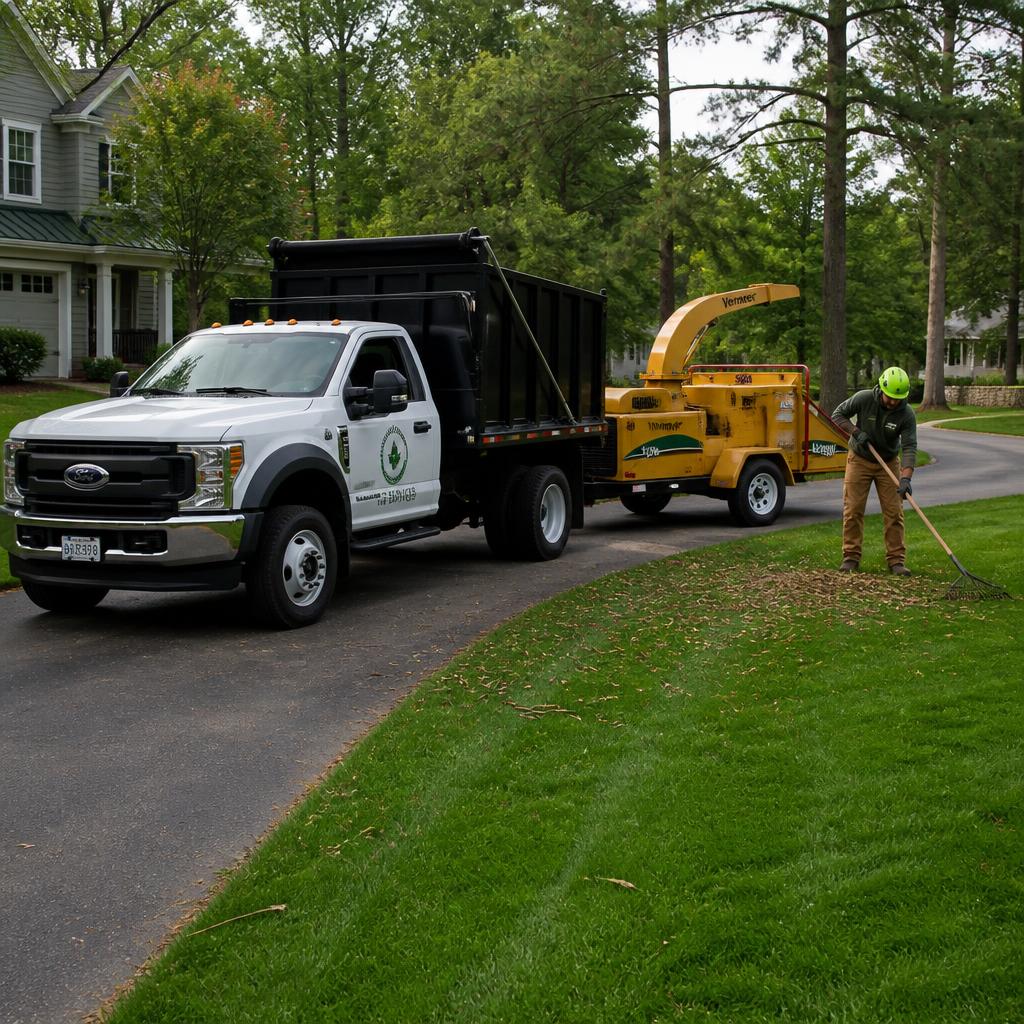
- Debris processing and haul-off — chipping on site, hauling, or burn permits where townships still allow them.
- Rough grading — knocking down the churned ground to a workable plane for the excavator that follows.
- Protection of what stays — fencing off keeper trees’ root zones so the machines don’t kill in a week what took eighty years to grow.
Residential vs. commercial: same tools, different game
We run both kinds of jobs, and the differences go far beyond acreage:
The residential trap is buying commercial scope you don't need — paying to grub stumps under what will be lawn. The commercial trap is the reverse: a cheap "clearing" bid that leaves organic material under a future slab, which the geotech flags and someone clears twice. Match the spec to what the ground will carry.
What clearing costs in Michigan (2026)
Two pricing lenses, depending on project size. By the acre, density is everything:
Residential lots price by the job, because access and what-stays matter as much as area:
What moves a job inside those ranges: tree count and size (a dozen mature oaks is a tree-removal project wearing a clearing hat), stump handling (grind vs. grub), haul distance, slope and wet ground, and how surgically we're working around keeper trees. Material with value runs the other way — good hardwood logs and a firewood pile offset cost.
Timing: why winter is clearing season
Counterintuitive but true: frozen ground is the best clearing surface in Michigan. Machines that would rut a wet April lawn track clean over frozen turf, low-lying corners that are impassable muck in spring are solid in January, and the dormant season means no nesting birds, no leaf canopy hiding structure, and the least stress on any keeper trees whose root zones the equipment skirts. Storm season is the other calendar anchor in reverse: clearing scheduled for late summer competes with storm response for crews and equipment across the whole region, and prices follow. If your build breaks ground in spring, the smart sequence is clearing in late winter — permits sorted in fall, machines on frozen ground in February, a mud-free site ready the day the excavator mobilizes.
Also know what "cleared" doesn't include, on our bids or anyone's: final grade, topsoil import, and seeding are landscape scope; utility trenching and foundation excavation are sitework scope. Rough grade is where clearing ends — anything beyond it should appear as its own line, priced or excluded explicitly.
Permits and environmental rules (the part that stops projects)
- Part 91 (Soil Erosion & Sedimentation Control). Disturb one acre or more — or work within 500 feet of a lake or stream — and Michigan requires a county-issued SESC permit with silt fencing and erosion controls. Kent County enforces; skipping it earns stop-work orders.
- Wetlands (EGLE). Filling or clearing regulated wetland needs state review. West Michigan’s low corners hide more jurisdictional wetland than buyers expect — a delineation before purchase beats a violation after.
- Township tree and zoning rules. Some townships regulate clearing on plats, near roads, or over stormwater capacity. The same parcel-by-parcel homework from our permit guide applies at clearing scale.
- Burn permits. Open burning of cleared material is township-by-township and season-by-season; chipping is the reliable default.
Our process and responsible disposal
Every project starts with a walked site visit: flagging keepers, sorting the permit picture, and producing an itemized quote. Work sequences clean — protection fencing first, brush and understory, trees (logs sorted for value), stumps per the build plan, then debris processing and rough grade. Nothing gets buried on site, ever: buried organics are the settling foundation problem of ten years from now. Chips stay as mulch if you want them, hardwood goes to the firewood program, and the rest is hauled and documented. Lot clearing in Grand Rapids books site visits year-round — frozen ground is actually prime clearing season — request yours here.
Frequently asked questions
Density decides: light brush runs $400–$1,200 per acre, medium growth $1,200–$2,500, and heavy timber $2,500–$5,000 per acre. Residential lots price by the job — a quarter-acre typically lands $1,200–$5,000 depending on what’s standing on it.
Often, yes. Disturbing an acre or more triggers Michigan’s Part 91 soil erosion permit through the county, and work within about 500 feet of a lake, stream, or wetland can require EGLE review. Small residential clearings usually need nothing — but verify before the first machine arrives.
It gets sorted, not dumped: merchantable logs to the mill or firewood pile, brush chipped into mulch on site or hauled, stumps ground or extracted per the build plan. Responsible disposal is a line item you should see on any honest bid.
A brushy quarter-acre is usually a one-to-two-day job; a wooded half-acre with stumps and grading prep runs several days. Weather and permit timing move schedules more than the cutting does.
Jason leads Diversified Tree Service LLC, an owner-operated, fully-insured crew serving Grand Rapids and West Michigan — 10+ years in business with 25+ years of combined crew experience in tree removal, trimming, and storm response. BBB accredited · 24/7 emergency.