Good news first: for the tree in your yard — fully on your property, not in the strip by the street — Grand Rapids generally requires no permit to remove it. Michigan strongly protects a private owner's right to manage trees on private land, and the city doesn't referee your backyard.
The rules kick in at one very specific line: the public right-of-way. Cross it — or touch a protected tree — and the City Forester is part of your project whether you invited them or not. Here's where that line runs, and how to stay on the right side of it. (Rules change; confirm current requirements with the City of Grand Rapids Forestry Department before you cut.)
The short answer
Private-property trees: no permit, in nearly every case — dead, alive, ugly, or in the way. Right-of-way trees — the ones in the tree lawn between sidewalk and curb — belong to the city, and pruning or removing one requires Forestry approval even though it fronts your house. Between those poles are edge cases (boundary-line trees, protected species, escrow/development conditions), and five minutes of checking beats a citation and a replacement-planting order.
Why the caution about a permit that's usually free? Because the downside is asymmetric. Cutting a city tree without approval isn't a parking ticket — municipalities can charge the appraised value of the tree (mature street trees appraise in the thousands), plus fines, plus mandatory replacement planting. Five minutes of checking against a four-figure mistake is the easiest risk math in this trade.
When you DO need a permit or approval
- Street and tree-lawn trees. Anything rooted in the public right-of-way is city property, managed by the Forestry division. Removal, pruning — even hanging a swing — needs their sign-off, and unauthorized work on a city tree can mean fines plus the appraised value of the tree.
- Trees straddling the property line. Legally shared with your neighbor; removing one without their consent invites a civil claim. Get written agreement first.
- Development and site-plan conditions. If your lot was platted with tree-preservation requirements, or you’re clearing for construction, the site plan may bind specific trees — check before the excavator shows up. (Larger projects trigger state rules too; see our land clearing guide.)
- Landmark/protected trees. Rare in practice, but designated heritage trees carry their own rules regardless of whose land they stand on.
When you likely don’t
A tree entirely on your private land, no shared trunk, no development strings attached: yours to remove. That covers the overwhelming majority of residential jobs we do — the dying ash by the garage, the silver maple over the roof, the spruce row that outgrew the lot. Dead, diseased, and storm-damaged trees are the clearest case of all; no Michigan municipality wants a homeowner waiting on paperwork while a hazard leans over the kitchen. If a tree is actively dangerous, document it with photos and remove it — see the warning signs that justify acting fast.
How the City of Grand Rapids handles it
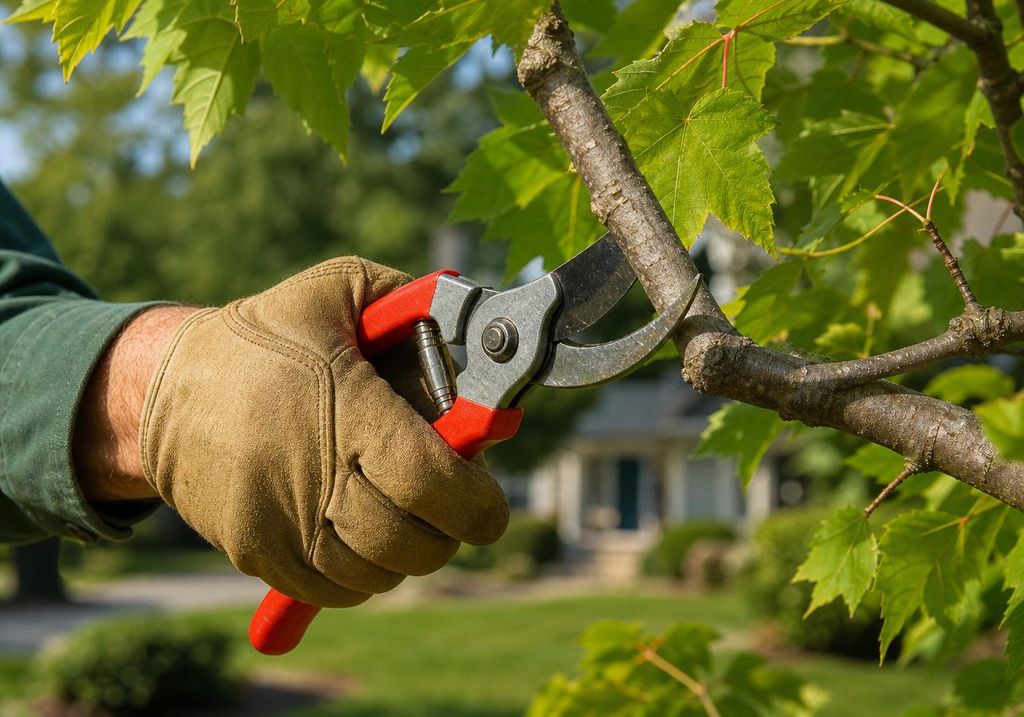
Right-of-way tree work runs through the city's Forestry division (Parks & Recreation, 201 Market Ave SW). The instrument is a tree-maintenance permit: you (or your contractor) describe the tree and the work, the City Forester reviews — sometimes with a site visit — and approves, modifies, or handles the work through the city's own program. The permit has typically been free; the city's interest is control of the urban canopy, not fees. Two practical notes from jobs we've run: allow lead time (this is a review, not a rubber stamp), and if a city tree is genuinely hazardous, report it — hazardous city trees are the city's liability to fix, sometimes at no cost to you at all.
Outside city limits? Check your township
Everything above describes the City of Grand Rapids proper. Cross into the suburbs and the rulebook changes with the boundary sign: Kentwood, Wyoming, East Grand Rapids, and the townships each write their own tree ordinances, and they differ more than you'd expect. Some regulate only street trees, like the city. Some tie tree removal to lot coverage and stormwater rules on newer plats. East Grand Rapids, with the most valuable canopy in the county, polices its right-of-way trees especially carefully. And rural townships like Caledonia or Lowell generally regulate almost nothing on private residential land — but development parcels, wetland buffers, and river frontage carry state-level rules that don't care which township you're in.
The practical rule we use on every job: the parcel decides, so we check the parcel — municipality, right-of-way width, and any recorded conditions — before quoting work near a street or boundary. It takes minutes and it's how a removal stays a removal instead of becoming a hearing.
HOAs, neighbors, and the rules nobody posts
Two private layers sit on top of city code. HOA covenants in some West Michigan associations require architectural-committee approval for removals, or mandate replacement plantings — the city can't waive those, so read your covenants first. Neighbors matter at the line: you may trim encroaching branches back to your boundary (not to the point of killing the tree), but the trunk's location decides ownership, and a shared trunk means shared consent. When a neighbor's tree threatens your property, the productive path is a documented letter with an arborist's assessment — it creates the negligence paper trail that matters if the tree later falls, as covered in our insurance guide.
How we handle permits for clients
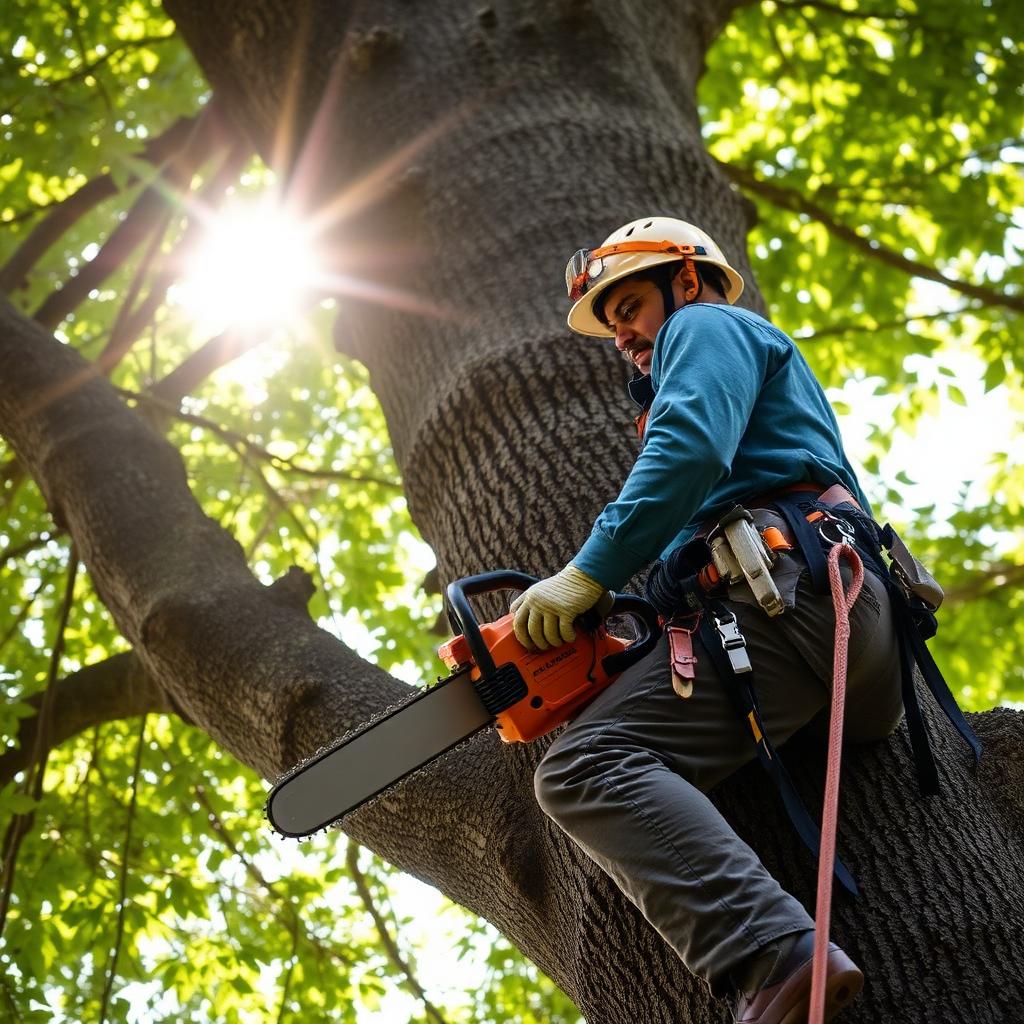
Simply: it's part of the job. On every estimate we identify which trees are yours and which are the city's — homeowners are wrong about the right-of-way line more often than not, and it's a happy surprise as often as a disappointment. Where Forestry approval is needed, we prepare and file the permit, walk the Forester through the work plan, and schedule around the review. Where the tree is yours, we put that in writing and get on with it. Tree removal in Grand Rapids comes with the paperwork included — book a free estimate and we'll sort your trees from the city's on the first visit. Costs for the removal itself are in the 2026 cost guide.
Frequently asked questions
Almost never. A tree standing fully on your private property — front yard or back — can generally be removed without any city permit, especially if it’s dead, diseased, or hazardous. The rules change at the public right-of-way.
The city. That strip (the tree lawn) is public right-of-way, and the trees in it are managed by Grand Rapids’ Forestry division — you need city approval to prune or remove one, even though it fronts your house.
Grand Rapids’ tree-maintenance permit for right-of-way work has typically been free — the point is oversight, not revenue. Rules and processes change, so we confirm current requirements with the Forestry Department on every right-of-way job.
Yes. HOA covenants are private contracts layered on top of city rules — some West Michigan associations require board approval or replacement plantings. Check your covenants before scheduling; the city permit doesn’t override them.
Municipal rules change. Confirm current requirements with the City of Grand Rapids Forestry Department (201 Market Ave SW) before removing any tree near the public right-of-way.
Jason leads Diversified Tree Service LLC, an owner-operated, fully-insured crew serving Grand Rapids and West Michigan — 10+ years in business with 25+ years of combined crew experience in tree removal, trimming, and storm response. BBB accredited · 24/7 emergency.