
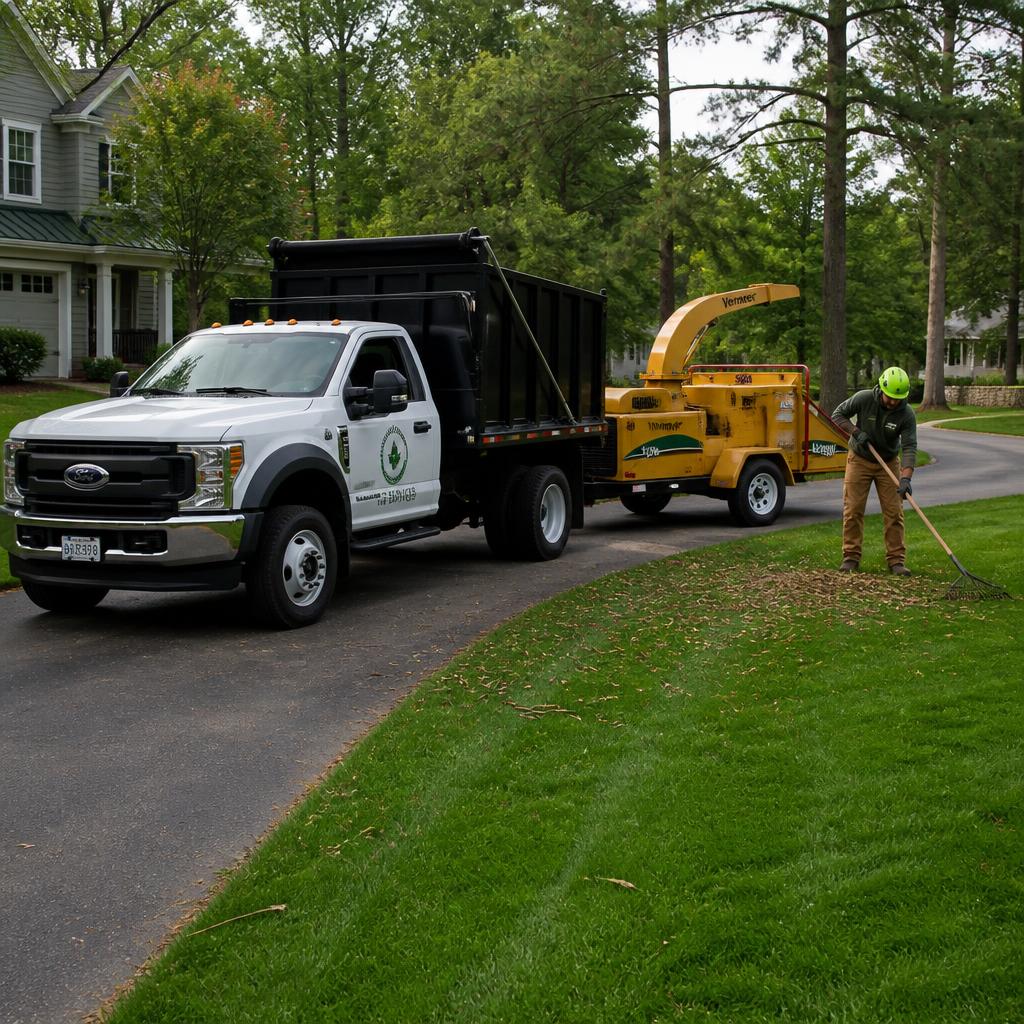
"Just get rid of the stump" turns out to be two very different jobs at two very different prices — and companies don't always explain which one they're quoting. Grinding chews the stump into chips below grade and leaves the roots to nature. Removal (extraction) digs the stump and major roots out of the ground entirely. One costs about as much as a nice dinner out; the other can cost as much as the tree removal did.
Here's the honest comparison, and the short list of situations where the expensive option is actually the right one.
What each method actually is
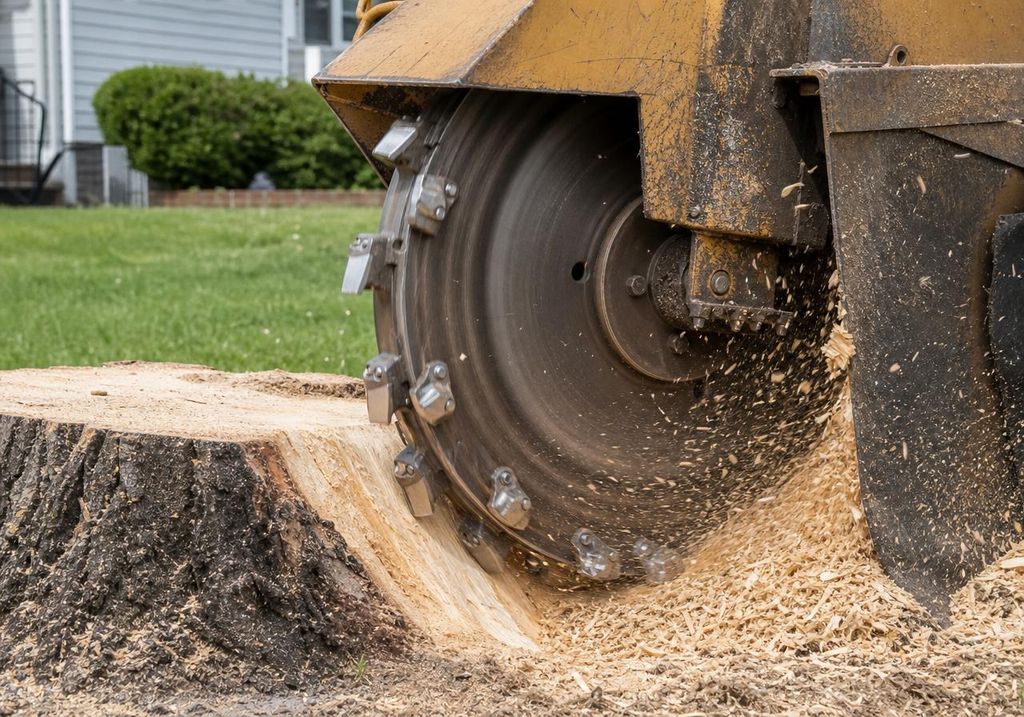
Stump grinding uses a carbide-toothed wheel to shave the stump into chips, working from the top down to typically 4–8 inches below grade (deeper on request). The root system stays in the ground, the chips backfill the hole, and the lawn around the stump is essentially undisturbed. In and out in under an hour for most stumps.
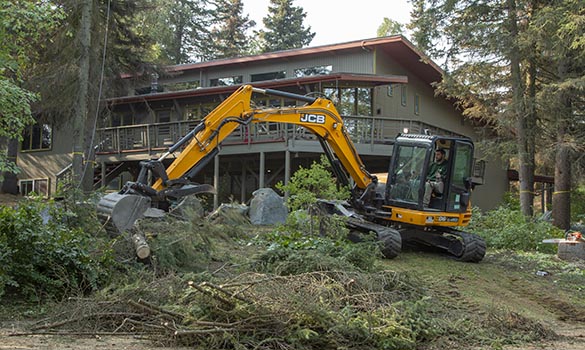
Stump removal means excavation: an excavator or backhoe digs around the stump, tears or cuts the major roots, and wrestles the whole root ball out of the ground. What's left is a genuine crater — often 3–5 feet across and a couple feet deep for a mature shade tree — plus torn lawn where the machine tracked, a root ball to haul away, and a lot of imported soil to make the yard whole again.
Side-by-side comparison
When grinding wins (which is most of the time)
For a stump in a lawn that you want to mow over, seed, or landscape around, grinding wins on every axis that matters: a fraction of the price, one visit, no crater, no machine damage to the rest of the yard. It kills the stump's ability to sprout, evicts the carpenter ants, and once the grindings settle and grass is in, you'll forget where the tree stood. This is the right answer for 9 out of 10 stumps we're asked about, which is why it's the default on our stump grinding service.
When full removal makes sense
- Replanting in the same spot. A new tree needs clean soil where the old root ball sits — extraction is the only honest way to give it that.
- Construction and hardscape. Footings, foundations, additions, retaining walls, and driveways can’t be built over decomposing root systems; engineers and inspectors will require extraction.
- Regrading projects. If the yard’s grade is changing anyway, the excavator is already on site and the crater is getting filled regardless.
- Utility conflicts. Roots implicated in sewer or drain damage sometimes need physical removal rather than slow decomposition.
Notice what's not on the list: routine lawn stumps. If a company is pushing full removal for a stump in the middle of the backyard, get a second quote.
The middle path: deep grinding
There's a third option worth knowing about, because it solves most of the cases people think require extraction: deep grinding. Instead of the standard 4–8 inches below grade, the grinder works down 12–18 inches and chases the major surface roots outward. That's deep enough to plant a new tree near the old spot with clean soil brought in, deep enough for sod, irrigation lines, and most garden beds, and deep enough that nothing woody interferes with a paver patio's base course. It costs more than standard grinding — roughly half again to double, depending on the stump — but it's still a small fraction of extraction, with none of the crater or machine damage. When a homeowner tells us "full removal" at the estimate, deep grinding is usually what they actually need; the excavator is for footings and regrades, not gardens.
After any grind, here's the honest timeline: chips settle over the first year (top off with soil), grass grows the first season if you take the topsoil finish, and within two summers the spot is indistinguishable from the rest of the lawn — a question we get often enough that it deserves the plain answer.
What happens to the roots and grindings
After grinding, the root system — cut off from the crown's energy — dies and decomposes over 5 to 10 years, feeding the soil as it goes. It won't keep growing toward pipes; growth requires the leaves that are long gone. The sprouting exceptions (black locust, tree-of-heaven, certain poplars) can push shoots from live roots, and we handle those species accordingly at grinding time. The grindings themselves make decent mulch for beds and paths; most homeowners have us backfill the hole with them and top off with soil a season later once settling finishes.
Cost snapshot
Whichever way you go, four questions sort a good quote from a vague one:
- How deep do you grind, and is deeper available? "Below grade" can mean 2 inches or 12 — get the number.
- Are surface roots included? Heaved roots across the lawn are a separate line item on honest quotes, not a surprise on the invoice.
- What happens to the grindings? Backfilled, hauled, or left in a pile — all three exist in the market.
- Is utility checking part of the visit? Irrigation, dog fences, and low-voltage lighting die under grinders that didn’t ask.
Grinding: $103–$134 per stump typical in Grand Rapids, with additional stumps $30–$50 each — the complete pricing breakdown is in our stump grinding cost guide. Extraction: $400–$1,500+ depending on stump size, access, and hauling, plus lawn repair and fill. And if the tree is still standing, quote the whole job at once — removal plus grinding bundles cheaper than two visits; see the tree removal cost guide for that half of the math, or get an exact quote for your yard.
Frequently asked questions
Grinding, by a wide margin. A typical Grand Rapids stump grinds for $103–$134; full extraction of the same stump — machine time, the crater it leaves, and hauling — routinely runs 3–10× that before you’ve repaired the lawn.
Not in the exact hole — grindings and remaining roots make poor rooting soil until they decompose. Plant a few feet off-center, or ask for deep grinding plus topsoil replacement if the exact spot matters. Full removal is the sure answer for same-spot replanting.
For most species, no — without the stump’s energy factory the roots die and decompose over 5–10 years. The exceptions are aggressive sprouters (black locust, tree-of-heaven, some poplars) where surviving roots can send up shoots; those we treat at grinding time.
It removes their home. Grinding evicts carpenter-ant colonies living in the stump; any stragglers relocate quickly without the rotting wood. If activity persists, the source is another stump or wood contact nearby.
Jason leads Diversified Tree Service LLC, an owner-operated, fully-insured crew serving Grand Rapids and West Michigan — 10+ years in business with 25+ years of combined crew experience in tree removal, trimming, and storm response. BBB accredited · 24/7 emergency.