Most trees give warning before they fail. Not all — a healthy-looking silver maple can drop a limb on a calm day — but the big failures we get called to at 2 a.m. usually announced themselves for months or years first: a lean that wasn't there last summer, mushrooms nobody looked at twice, a crown that thinned a little more each year.
This is the field checklist we run on every hazard inspection, translated for homeowners. None of these signs automatically means "cut it down" — several have fixes short of removal — but every one of them means get it looked at. Inspections are free, and the difference between a scheduled removal and an emergency one is measured in thousands of dollars.
1. A new or worsening lean
Trees that have always leaned are usually fine — they've built reaction wood for decades to carry the load. The red flag is change: a tree that's noticeably further over than last season, or leaning after a storm or a saturated week. Look at the ground on the side away from the lean: heaving soil, a lifting root plate, or freshly exposed roots mean the anchorage itself is failing, and the tree is coming down — the only question is whether it picks the date or you do. New lean over a house, driveway, or play area is a same-week call, not a someday call.
2. Trunk cracks, seams, and cavities
Vertical cracks that run deep into the wood, especially where two stems meet, are structural failures in progress. The classic West Michigan version is the co-dominant union with included bark — two trunks of similar size squeezing a strip of bark between them instead of fusing, common on silver maple and Bradford pear. Every windstorm pries the seam a little wider. Cavities are subtler: a hollow isn't automatically fatal (trees carry surprising loads as tubes), but a cavity plus a crack, or a cavity at the base where the trunk meets the roots, changes the math fast. Probe nothing yourself — just photograph it and have it assessed.
3. Large deadwood and bare limbs
Every mature tree carries some small deadwood. What matters is scale and pattern: limbs over two inches thick that hold no leaves in July, whole sections of crown gone bare, or bark sloughing off major branches. Arborists call the big ones "widow-makers" for the bluntest possible reason. A tree that's dead on one side often has root or trunk damage on that same side — the deadwood above tells you about the failure below. Deadwood over anything you care about gets priority regardless of season.
4. Mushrooms and conks at the base
Fungi don't attack healthy wood — they consume wood that's already dead or dying. So mushrooms at the trunk base, conks (shelf fungi) on the trunk, or honey-colored clusters over the root zone are lagging indicators: by the time you see the fruiting body, the decay column inside has been working for years. Some species (Ganoderma, Armillaria) are notorious root-rotters that hollow the anchorage while the crown still looks respectable. Fungus at the base is the single most under-reacted-to sign on this list.
5. Root damage and construction impact
Roots are the half of the tree nobody sees fail. If you've had a driveway cut, an addition, a sewer line replaced, or grading work inside the dripline in the last five years, the tree may be running on a fraction of its anchorage — decline often shows up two to four summers after the digging. Other tells: soil compaction from parked equipment, a new patio over the root zone, girdling roots circling the trunk at the soil line, or sawdust-fine frass from borers that target root-stressed trees. A tree can survive losing canopy; losing structural roots is a different story.
6. Storm damage and hanging limbs
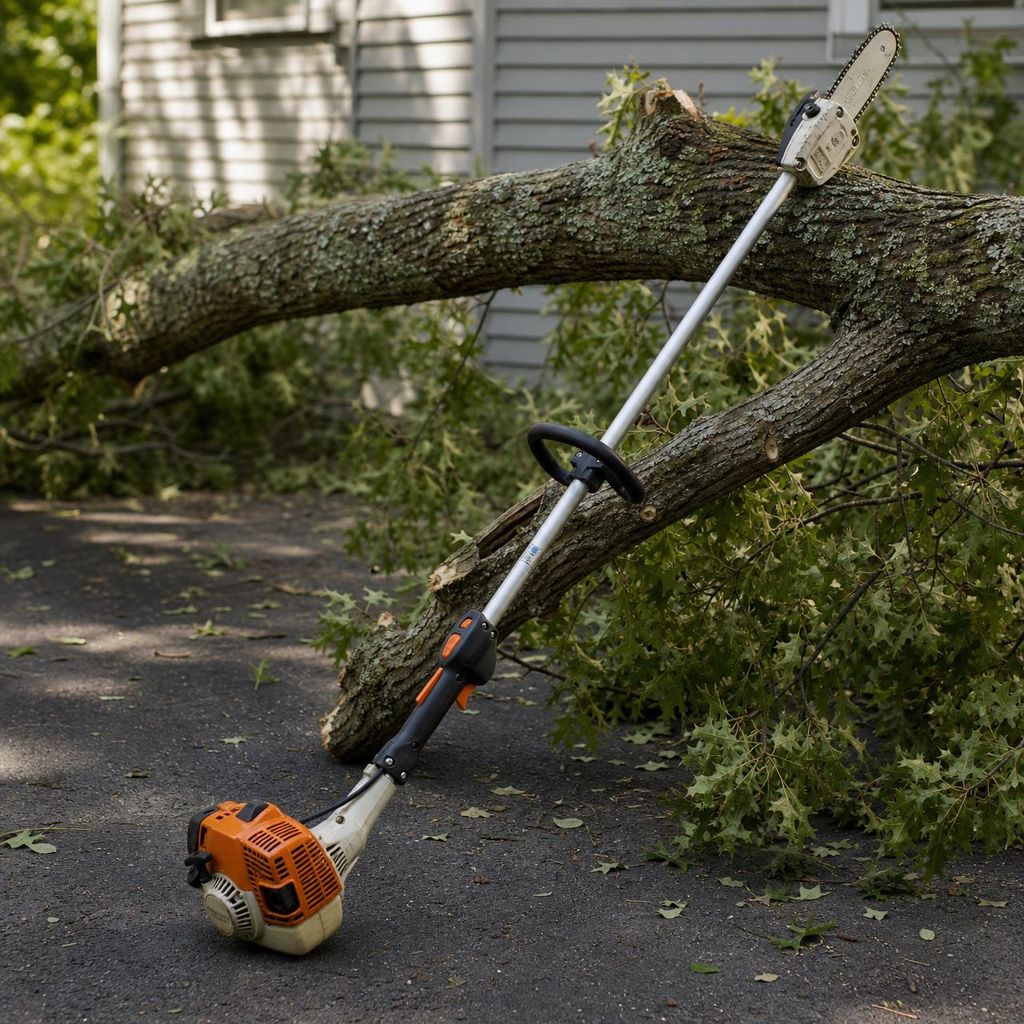
After every serious blow, walk the yard and look up. Hangers (broken limbs still lodged in the crown), fresh cracks at unions, and peeled bark strips from lightning or torsion all need attention before the next front moves through — a hanger's next stop is the ground, by the fastest route. A storm-damaged tree isn't necessarily a removal: clean pruning cuts and support hardware save plenty of them. But triage should happen within days, not months, and anything suspended over a roof or driveway is an emergency call.
7. Dead or declining after disease
West Michigan's two big killers announce themselves differently. Emerald ash borer works top-down: thinning upper crown, woodpecker damage, D-shaped exit holes, epicormic sprouts low on the trunk — and a dead ash gets brittle fast, becoming genuinely dangerous to climb within a couple of years, which is why standing dead ash cost more to remove every year you wait. Oak wilt kills red oaks in a single season — leaves browning from the edges in July, dropping while still half-green. A tree that's more than about 40% dead, or declining year over year with a diagnosed cause, is usually past saving; the honest move is a planned removal at standard rates instead of an emergency at premium ones.
When removal isn’t the answer
A checklist like this reads grimmer than reality. Plenty of scary-looking trees are structurally sound, and several real problems have fixes short of the saw: a split union can be cabled or braced, an over-extended limb can be reduced, deadwood can be cleaned out and the tree monitored, and well-timed pruning prevents half of what this article describes. We're an owner-operated crew, not a removal quota — if the tree can be saved for less than it can be removed, that's what we'll tell you.
What to do next: how our inspection works
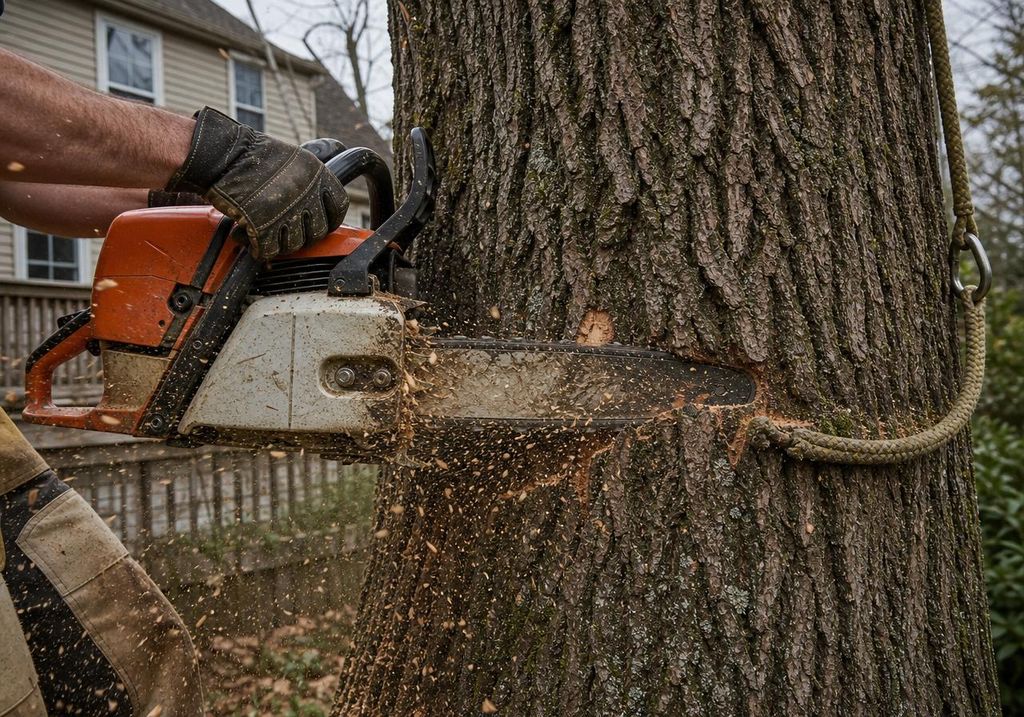
Call or send photos, and we'll walk the property with you — base, trunk, unions, crown, and the site history that explains them. Every tree gets one of four honest verdicts: fine, watch it (with what to watch for), fix it (pruning or hardware, priced on the spot), or remove it (with a written quote and timeline). No pressure, no invented urgency — most inspections end with "you're fine" on at least half the trees the homeowner was worried about. Book a free inspection or read what a removal actually costs in our 2026 cost guide.
Frequently asked questions
No — many trees have leaned their whole lives and built compensating wood to carry it. The dangerous lean is the NEW one: a change after a storm or wet spell, especially with heaving soil or exposed roots on the back side. New lean means root failure in progress, and it belongs at the top of your call list.
Not always, but they always mean an inspection. Conks and mushrooms are the fruiting bodies of fungi that consume structural wood — by the time they appear, decay is established. How much strength is left depends on the species of fungus and the extent of the column, which is exactly what an assessment determines.
Sometimes — it depends on why. Drought stress and transplant shock can be reversed. Girdling roots can be corrected if caught early. But a tree that’s half-dead from EAB, oak wilt, or basal decay is on a one-way slope, and waiting mostly increases the removal price and the risk.
If you knew (or reasonably should have known) the tree was hazardous, you can be liable for the damage — and your insurer can deny or subrogate. A documented inspection is cheap protection either way: it either clears the tree or gives you the paper trail that you acted responsibly.
Jason leads Diversified Tree Service LLC, an owner-operated, fully-insured crew serving Grand Rapids and West Michigan — 10+ years in business with 25+ years of combined crew experience in tree removal, trimming, and storm response. BBB accredited · 24/7 emergency.