
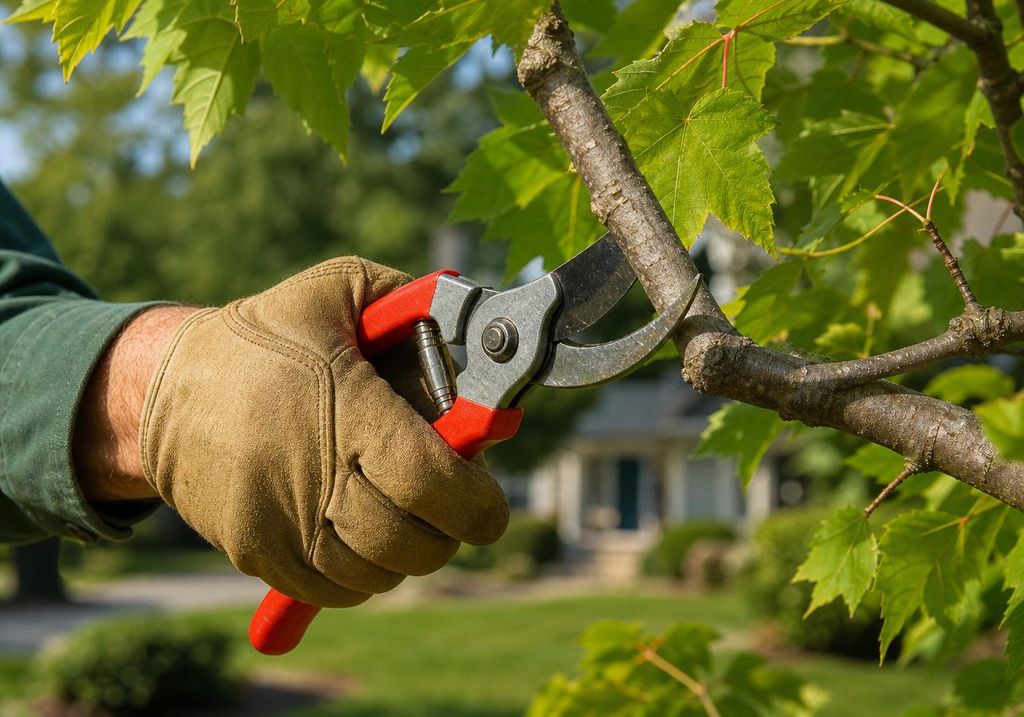
A mature shade tree is the one thing on your property you genuinely cannot buy a replacement for. The eighty-year-old maple shading the whole back patio, the twin-stemmed oak the kids' swing hangs from — when a tree like that develops a structural problem, "cut it down" costs you thirty years of waiting for its replacement to matter. Which is why the most underused tools in this trade are a steel cable and a threaded rod.
Cabling and bracing exist for exactly one situation: a tree worth keeping, with a weak point worth fixing. Here's what the hardware actually does, when it's the right call instead of removal, and what it costs — including the comparison that matters.
What cabling and bracing actually are
Cables are installed high in the crown — typically two-thirds of the way up the stems they support — limiting how far limbs can travel in wind so a weak union never sees the load that would split it. Static (steel) systems hold firm and carry serious loads; dynamic (synthetic) systems allow controlled movement, letting the tree keep exercising and building its own reaction wood. Which one fits depends on the defect, the species, and what the limb hangs over.
Brace rods are the heavy intervention: threaded steel rods installed through a split or weak union itself, bolting the stems together at the point of failure. Rods handle the crack; cables above take the leverage off it. On a serious split — say, a co-dominant maple that let go halfway in a July storm — the two work as a system, and installed promptly they can save a tree that looks finished.
The problems they solve
- Co-dominant stems with included bark — West Michigan’s signature defect, especially on silver maple. Two "trunks" squeezing bark between them instead of fusing, prying apart with every storm.
- Weak V-crotches on heavy horizontal limbs — the union is fine today and overloaded at full summer leaf plus a thunderstorm gust.
- Storm-cracked unions caught before full failure — rod the crack, cable the leverage, keep the tree.
- Over-extended limbs that pruning alone can’t safely shorten — a cable shares the load a reduction cut can’t remove.
- Heritage trees over targets — where "probably fine" isn’t good enough over the play set, hardware buys certainty.
Species patterns worth knowing locally: silver maple is the county's cabling client number one — fast wood, multi-stem habit, included bark as a lifestyle. Willows and boxelder split constantly but are rarely worth hardware; the wood is too weak to anchor reliably. Bradford/Callery pears are practically designed to fail at 20 years and mostly deserve replacement, not rescue. And the great oaks and sugar maples — slow, dense, long-lived — are the best hardware candidates in the yard: sound anchoring wood and decades of remaining service to protect.
When it works — and when removal is safer
The honest screen has three questions. Is the wood sound? Hardware anchors in solid wood; stems hollowed by decay have nothing to bolt to. Is the defect localized? One bad union in an otherwise healthy tree is a candidate; a tree failing in three places is telling you something. What's underneath? A cabled tree over the garden is a managed risk; over a bedroom, the tolerance drops. A tree showing several of the seven removal signs — root failure, basal decay, major dieback — is past what hardware fixes, and we'll say so. But the split-union maple with a full healthy crown? That tree gets saved more often than homeowners believe when they call.
What it costs vs. removal
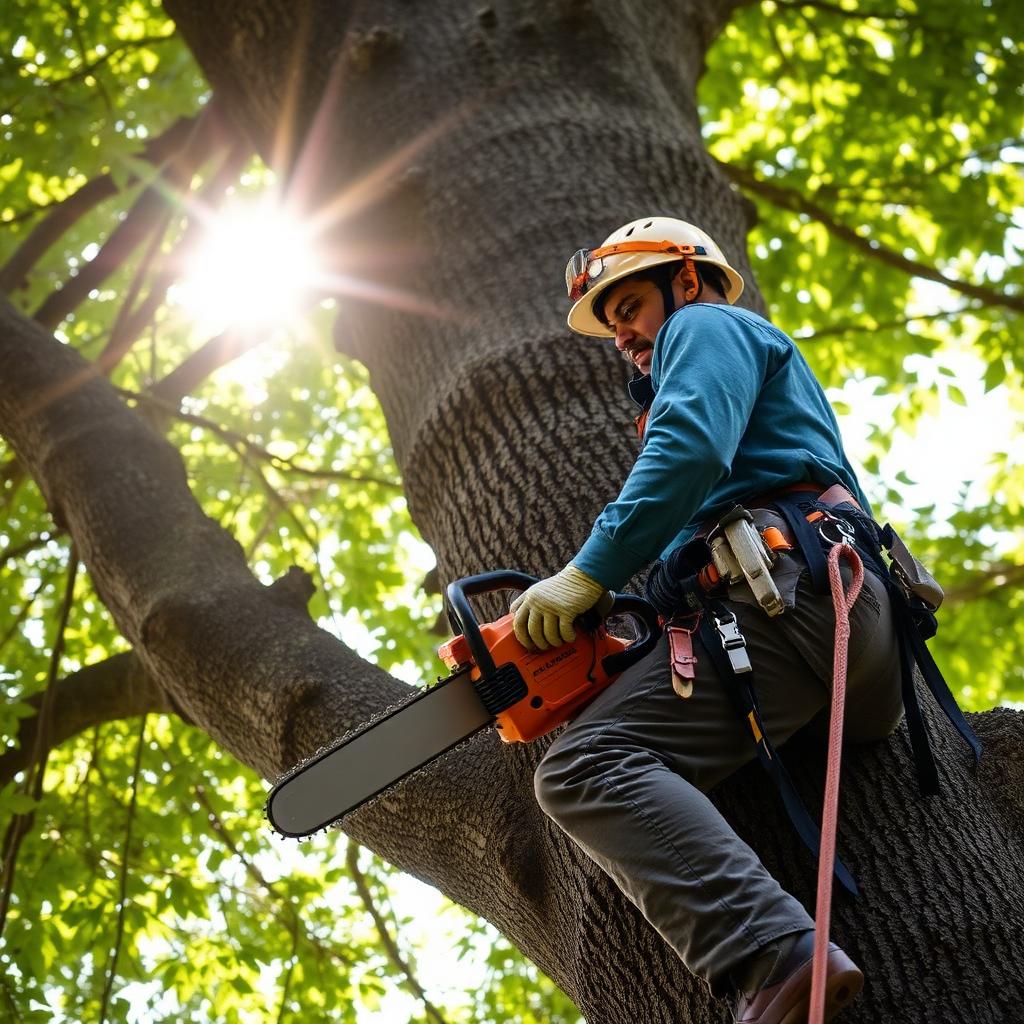
Now the comparison that decides it: removing the same mature tree runs $2,500–$4,000 for a large specimen — plus the permanent loss of shade, screening, and property value that a replacement sapling won't return for decades. A $700 cable system on a savable tree isn't just cheaper this year; it's cheaper than every alternative for the next twenty. The math only flips when the tree isn't sound — which is why the assessment comes first.
What an installation actually looks like
A cabling job is quieter than any other visit we make — no chipper, no chainsaw chorus, usually no truck on the lawn. It starts with the structural assessment: mapping the defect, judging the wood around it (a resistance check where decay is suspected), and sizing hardware to the actual loads — stem diameter, limb length, sail area, what the limb hangs over. Then a climber sets the anchors at the engineered height, installs the cable at the correct tension (snug enough to limit travel, never so tight the tree stops moving entirely), and, where rods are called for, drills and bolts the union itself with threaded rod and heavy washers that the tree will grow around and eventually engulf. The whole visit for a typical single-cable install is a morning. You get photos of the installed hardware, a diagram of what's where — future crews and future owners need to know a cable is up there — and a dated entry in our inspection log.
One more honest note: the cheapest cabling is the kind you never need. Most cable-worthy defects start as correctable structure in a young tree — the co-dominant leader a $200 structural pruning pass would have removed at fifteen feet. If you're planting or inheriting young trees, that pass is the real bargain on this page; the hardware is for the trees that missed it.
Inspection and ongoing care
Hardware is a commitment, not a one-time fix. Systems get inspected every 2–3 years — tension, anchor growth, hardware condition — and after any major storm; growing trees eventually need cables repositioned or upsized. Pair the hardware with sensible crown management to keep wind load reasonable, and a braced tree can outlive the mortgage. We keep an inspection log for every system we install and call you when yours is due — book the first look free.
Frequently asked questions
Most single-tree cable installations run $250–$1,500 depending on size and hardware; systems that add brace rods run $500–$2,500+. Steel cable systems typically cost $300–$800, synthetic dynamic systems $400–$900, and brace rods $200–$1,000 each.
Steel systems are typically inspected every 2–3 years and re-tensioned or replaced as the tree grows; hardware commonly serves 10–15 years. Synthetic systems get the same inspection cycle. The inspection is quick and far cheaper than the failure it prevents.
Properly installed, no — hardware is placed to work with the tree’s growth, and dynamic systems in particular let the tree keep moving and building its own reaction wood. Bad installs (wraps that girdle, undersized hardware) do hurt, which is why this is arborist work, not handyman work.
No — and honesty here matters. A union that’s fully failed, extensive decay in the stems, or a tree over a target that can’t tolerate any risk are removal calls. Cabling is for structurally sound wood with a correctable weak point.
Jason leads Diversified Tree Service LLC, an owner-operated, fully-insured crew serving Grand Rapids and West Michigan — 10+ years in business with 25+ years of combined crew experience in tree removal, trimming, and storm response. BBB accredited · 24/7 emergency.