
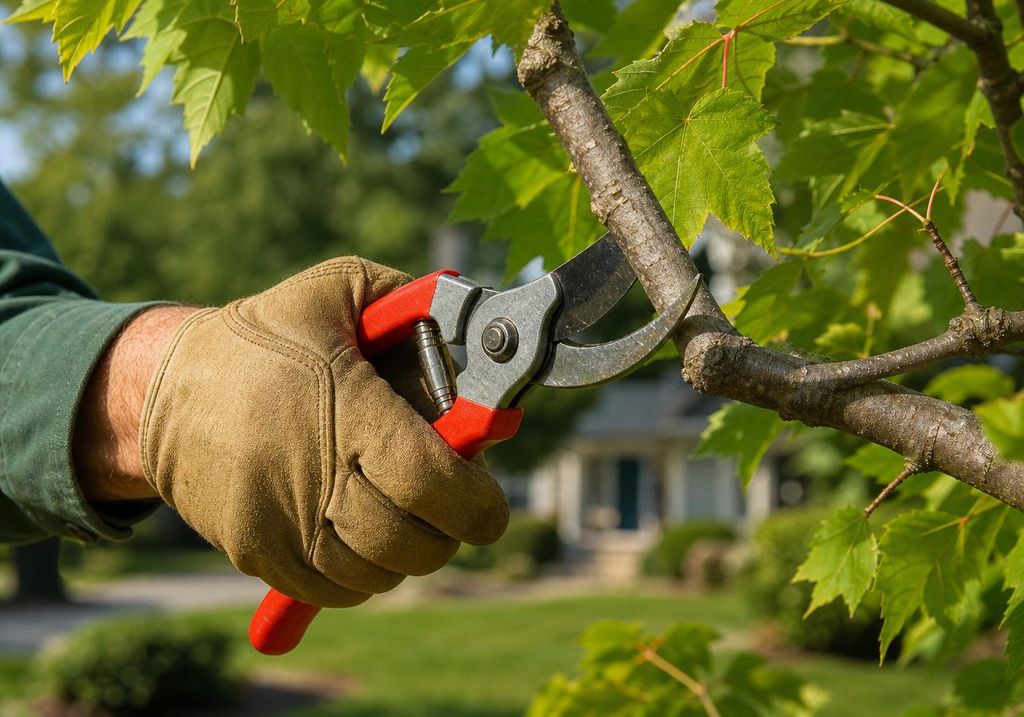
Ask five neighbors when to trim a tree and you'll get five answers. Ask an arborist who works West Michigan yards year-round and you'll get one: late winter, for most trees, most of the time — with a handful of species-specific exceptions that really matter, one of which (the oak-wilt rule) can be the difference between a healthy oak and a dead one.
Here's the full calendar: what each season is good for, which species play by their own rules, and the jobs that shouldn't wait for any season.
The short answer: late winter wins
For the large majority of Grand Rapids trees — maples, oaks, honeylocusts, lindens, crabapples, fruit trees — the ideal window is February through early April, while the tree is fully dormant. The structure is visible without leaves, cuts made in dormancy seal fast when spring growth starts, disease and insect pressure is at its annual minimum, and frozen ground means the equipment leaves no ruts in your lawn. It's also when scheduling is easiest and pricing is at its most competitive.
How often should trees be trimmed?
Season is half the answer; frequency is the other half. Mature shade trees in good health want a professional visit every 3–5 years — enough to manage deadwood, keep clearance over the roof, and catch structural problems while they're still cheap. Young trees (first 10–15 years) benefit from a light structural pass every 2–3 years, which is where the real money is saved: a $200 corrective cut on a 15-foot tree prevents the $2,000 co-dominant-stem failure on the same tree at 60 feet. Fruit trees are annual — every dormant season, no exceptions, if you want fruit instead of firewood. And fast-growing, weak-wooded species (silver maple, willow, boxelder) deserve a look every 2–3 years regardless of age, because they build failure-prone growth faster than anything else in the yard.
If it's been a decade, don't panic and don't over-correct: a neglected crown gets restored over two or three visits, never in one severe cut. Any company proposing to remove a third of a mature tree's canopy in one session — or to "top" it — is selling damage.
Season by season in West Michigan
Winter (December – March): the workhorse window
Structural pruning, crown thinning, major deadwood — this is the season for all of it. If a tree needs significant work, this is when to book it.
Spring (April – May): proceed with care
Light cleanup is fine, but two cautions: sap-heavy species (maple, birch, walnut) will "bleed" from cuts — harmless but messy — and the oak-wilt window opens in April, which takes oaks off the table entirely until midsummer's end.
Summer (June – August): shaping and clearance
Good for light shaping, removing deadwood (easiest to spot against green foliage), clearance over roofs and driveways, and slowing overly vigorous limbs. Avoid removing more than 15–20% of live canopy in the heat.
Fall (September – November): the worst time for big cuts
Decay fungi are sporulating, cuts heal slowest, and pruning can trigger tender late growth that winter kills. Limit fall work to hazards and deadwood — and put the saved budget toward the fall cleanup that actually matters.
By species: the exceptions that matter
Safety pruning: any time, immediately
How do you know a tree needs work now, whatever the month? The tells we act on immediately:
- Cracked or hanging limbs ("widow-makers") anywhere over people, parking, or play areas.
- Deadwood over 2" diameter in the crown — it only comes down one way.
- Limbs touching the roof, gutters, or siding — abrasion damage compounds with every windy night.
- Growth into the electrical service drop — we coordinate with the utility where required.
- Mushrooms or conks on major limbs — decay columns hollow branches from the inside; weight tells you nothing.
The calendar is for elective work. Hanging limbs, storm cracks, deadwood over the driveway, branches into the service drop — hazards get handled the day they're found, in any season, because the falling branch doesn't check the month. Storm-damaged oaks are the one summer exception to the oak rule: emergency cuts happen immediately and get sealed as we go. If a tree needs more than pruning can fix, cabling and bracing can often save it — and our guide to winter-ready properties covers the pre-ice checklist.
Young-tree pruning: the cheapest tree work you’ll ever buy
One section worth its own heading, because almost nobody does it and everybody pays for it later. Most of the expensive failures we remove — the split V-crotch, the twin leader that tore the trunk in half, the over-extended limb over the garage — were visible and fixable when the tree was fifteen feet tall. Structural pruning while a tree is young means choosing one dominant leader, spacing the scaffold branches, and removing the crossing and included-bark unions while every cut is small enough to seal in a season. It takes an hour, costs less than a nice dinner, and it is the single highest-return job in this trade. If you planted trees with the last five years — or a builder planted them for you, usually badly — a young-tree structural pass this winter is the best money on this page. Where a mature tree already has the defect, cabling and bracing is the retrofit; our guide to how cabling saves mature trees covers when it works.
Trimming vs. pruning: what you’re actually buying
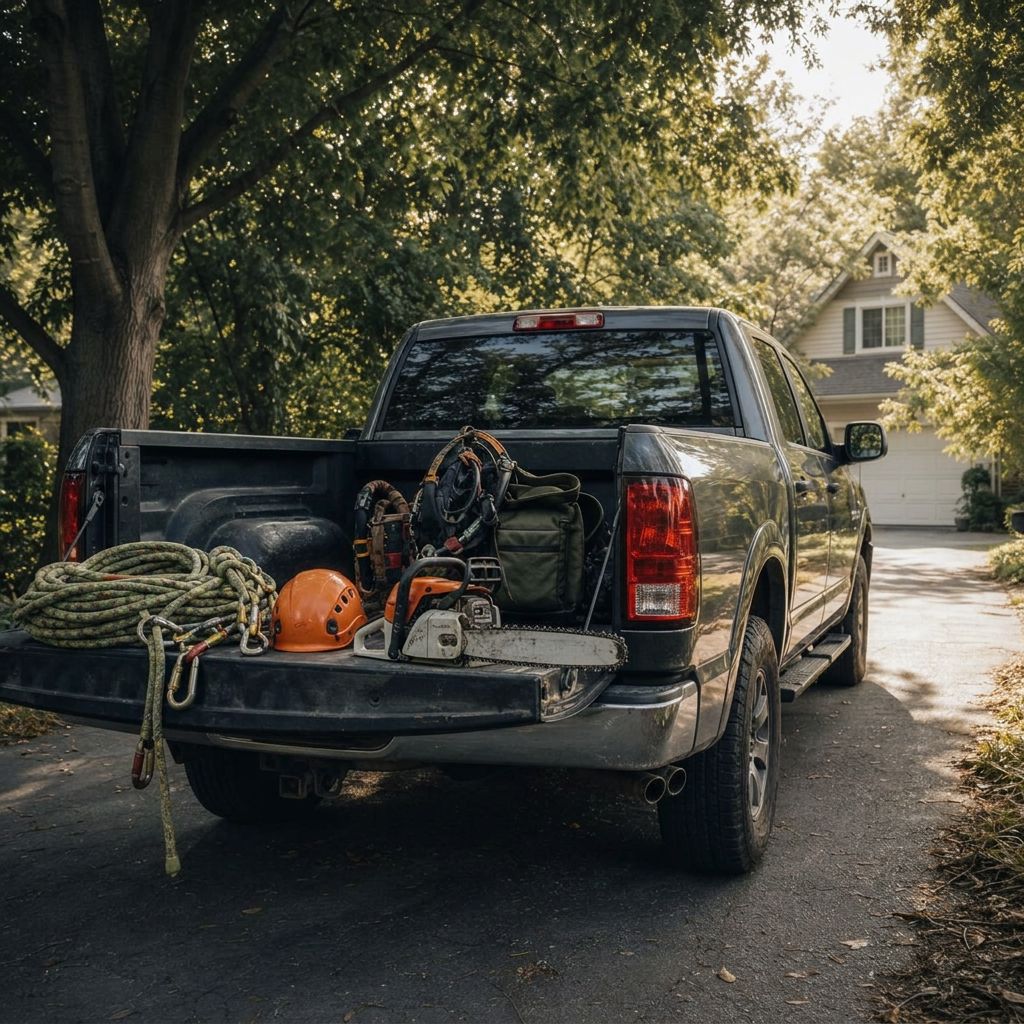
The words get used interchangeably, but on an estimate they mean different work. Trimming is appearance and clearance — shaping the crown, lifting over the sidewalk, clearing the roofline. Pruning is health and structure — removing dead, diseased, rubbing, and structurally weak wood with cuts placed at the branch collar so the tree can seal them. A good tree trimming and pruning visit in Grand Rapids does both, and a good estimate tells you which is which. Request a free estimate and we'll walk the trees with you.
Frequently asked questions
February and March are ideal for most species — full dormancy, visible structure, frozen ground, and cuts that seal quickly with spring growth. Book in January; the dormant-season calendar fills fast.
No — not between April and July. Fresh oak cuts attract the beetles that spread oak wilt, which is lethal and incurable. Storm damage is the only exception, and those cuts get sealed immediately.
Fall is the worst season for major pruning: cuts heal slowly, decay fungi are releasing spores, and pruning can push tender late growth that winter kills. Save big cuts for the dormant season; limit fall work to deadwood and hazards.
That’s sap flow, not injury — maples, birches, and walnuts pushed sap run freely from late-winter cuts. It looks dramatic but doesn’t harm the tree.
Jason leads Diversified Tree Service LLC, an owner-operated, fully-insured crew serving Grand Rapids and West Michigan — 10+ years in business with 25+ years of combined crew experience in tree removal, trimming, and storm response. BBB accredited · 24/7 emergency.