
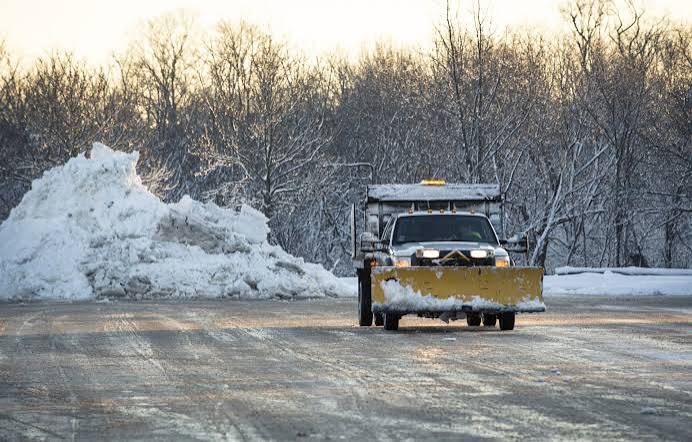
Grand Rapids sits in the lake-effect belt, and the numbers show it: 75+ inches in an average season, arriving in bands that can drop a foot overnight and be done by breakfast. That's 25–35 plowable events a winter — enough that how you handle snow is a real budget line, not an afterthought.
There are exactly three strategies: do it yourself, pay per visit, or buy the season. Here's the honest 2026 math on all three, and how to pick based on your driveway instead of your optimism.
The three ways to handle snow
DIY trades money for labor — yours, at 5:30 a.m. Per-push buys each storm individually: no commitment, variable total. Seasonal contracts buy certainty: one price, unlimited qualifying visits, November through March. None is universally right; the driveway, the winter, and your back decide.
It helps to understand what you're actually budgeting against. Grand Rapids snow isn't the steady, forecastable kind — it's lake-effect, generated when cold northwest air crosses the warm water of Lake Michigan and wrings out over Kent County in narrow, intense bands. That mechanism produces our signature pattern: a dozen small "nuisance" events of 2–4 inches, several honest 6-inch storms, and one or two overnight dumps a season where a band parks over your neighborhood and delivers a foot while the next suburb over gets a dusting. The pattern matters for the math: nuisance events are where DIY feels easy and per-push invoices quietly stack up, while the parked-band nights are where seasonal contracts and route priority earn their keep — everyone calls for service the same morning, and the trucks visit their contracts first.
DIY: the honest math
A shovel costs $30 and a gym membership. A respectable two-stage snowblower runs $800–$1,500 up front plus fuel and a carburetor's worth of annual maintenance — real cost per winter over a ten-year life: roughly $120–$200, unbeatable on paper. The unpriced items are the ones that matter: 30+ events a season at 30–60 minutes each is a full work-week of clearing; lake-effect timing means the driveway needs doing before your commute, not after; and heavy wet snow is a genuine cardiac event risk for adults past middle age — ERs see it every storm cycle. DIY wins for small, flat driveways attached to healthy schedules. It loses the morning you're traveling, sick, or sixty.
Per-push: pay by the storm
Per-push (per-visit) plowing is the à-la-carte option — the truck comes when snowfall crosses the trigger depth, typically 2 inches:
Multiply by a real winter: 25 visits at $70 is $1,750 in a heavy year, while a mild one might cost $600. Per-push suits light-snow neighborhoods, snowbirds gone half the winter, and anyone who wants a fallback rather than a subscription. The catch is priority: contract routes run first, per-push calls fill the gaps.
Seasonal contracts: buy the whole winter
One payment — in Grand Rapids typically $300–$700, most homes $350–$600 — and every qualifying snowfall gets cleared without a phone call or an invoice. It's the "never think about it again" product: the truck knows your driveway, you're on a guaranteed route, and February's fourth storm week costs the same as a green December. Contracts pencil out best exactly where DIY fails: bigger driveways, busy households, and winters that behave like Michigan winters. Read the trigger depth (2" is standard), what's included (sidewalks? salting? end-of-driveway berm the city plow leaves?), and whether there's a per-event cap — those four lines are the whole contract.
Which is cheapest for you
The break-even is simple: divide the seasonal price by your per-push rate. $450 ÷ $75 = six storms. Grand Rapids hasn't seen a winter with fewer than six plowable events in living memory — which tells you why the certainty product exists.
What actually affects your quote
- Driveway size and shape — length, width, turnarounds, and whether a truck can push through or must back-drag.
- Where the snow can go — a drive with no stacking space takes twice the time by February.
- Slope and surface — hills need more passes and more salt; fresh asphalt and pavers change the equipment.
- Sidewalks and salting — hand work and material are separate line items; city sidewalk ordinances apply in GR proper.
- Obstacles — basketball hoops, landscape islands, and unmarked edges slow every visit (stake your edges in October — see the winter prep guide).
Salting, sidewalks, and the city’s rules
Plowing clears the snow; salting handles what plowing can't — the compacted layer under tires, refreeze at the driveway apron, and the glaze that follows a freezing-rain event. Residential salting is typically a $15–$30 add-on per visit (material plus application), and worth it on slopes, shaded drives that never see melting sun, and anywhere an older adult walks to a car. Two cautions from the field: rock salt loses effectiveness below about 15°F (calcium chloride blends keep working colder, at a higher price), and heavy salting eats concrete that's less than a year old and burns the lawn edge it splashes onto — a good operator applies to the surface, not the landscape. Sidewalks are their own line item because they're hand or machine work off the truck: figure $10–$25 per visit for a standard frontage. In Grand Rapids proper, note that city ordinance makes sidewalk clearing the property owner's responsibility — the fine plus the liability exposure of an icy public walk is a worse deal than any sidewalk add-on.
Why booking early matters
Plow routes are built like paper routes: geographically, in order, at capacity. October signups get route spots; November callers get whatever gaps remain; the day after the first foot falls, everyone reputable is a waitlist. Booking early also buys the quiet-winter hedge — many operators (ours included) will credit an unusually light season toward spring work. Line it up alongside the rest of the fall checklist and winter becomes logistics instead of crisis. Snow plowing in Grand Rapids — get your address quoted before the lake decides for you.
Frequently asked questions
Per-push plowing runs $40–$100 per visit: roughly $40–$50 for a single-car driveway, $80–$100 for a two-car, with most homes landing $60–$90. Sidewalks, salting, and stacking space move the number.
Most Grand Rapids residential seasonal contracts run $300–$700, typically $350–$600 — one price for unlimited qualifying visits, November through March. Heavy winters make seasonal the bargain; light ones favor per-push.
On paper, after the first winter — a decent two-stage blower costs $800–$1,500 up front. In practice, count your time (30+ storms’ worth), the 5 a.m. starts, and the cardiac risk of heavy wet snow if you’re over 45. Many households run a hybrid: blower for light snow, service on contract for the real storms.
October. Routes are built geographically and fill by early November; after the first big storm, most reputable operators are waitlist-only.
Jason leads Diversified Tree Service LLC, an owner-operated, fully-insured crew serving Grand Rapids and West Michigan — 10+ years in business with 25+ years of combined crew experience in tree removal, trimming, and storm response. BBB accredited · 24/7 emergency.