
Fall cleanup isn't about tidiness — it's insurance. Every item on this list exists because skipping it costs real money later: matted leaves become April's dead lawn, packed gutters become February's ice dam, the unbooked plow contract becomes a snowed-in Monday. Grand Rapids gives you roughly eight good weekends between first color and first sticking snow; here's how to spend them.
Ten jobs, in working order. Do them top to bottom and winter finds nothing to exploit.
1–2. Leaves: clear the heavy drops, then get them gone
1. Don't let leaves mat. A light scattering is free fertilizer — run the mower over it and let the fragments feed the turf. Whole-leaf blankets are the opposite: under snow they compact into an airless mat that smothers grass and incubates snow mold, the gray circles of dead lawn you meet in April. The rule: if you can't see grass through it, it comes off. Mind the timing quirk of our canopy — maples drop in mid-October, but the oaks hold until November, so plan two passes, not one.
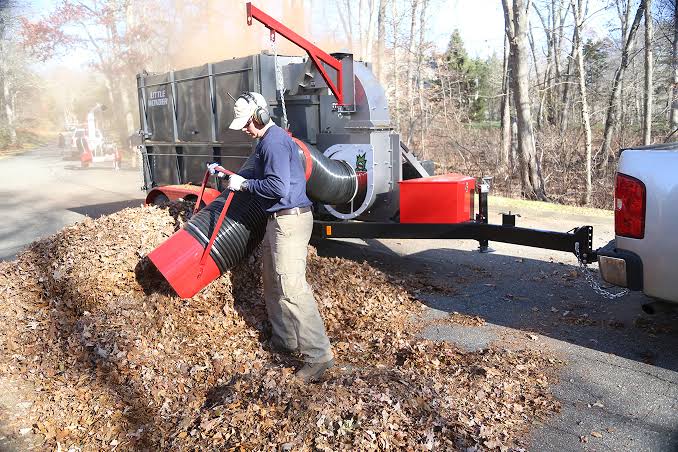
2. Get the piles off the property. Bagging is where fall weekends go to die. The efficient version is curbside pickup: rake or blow everything to the curb line and the vacuum rig swallows in minutes what bagging takes a day to do, off to compost instead of the landfill. Piles waiting for pickup shouldn't sit on the lawn more than a week — they kill the grass under them just like the mat you raked them out of.
Two refinements worth knowing. First, timing: schedule the work in two passes — a mid-October pass for the maple drop, gutters-adjacent trees, and all the booking calls, then an early-November pass after the oaks finally let go for the final clear, last mow, and shutoffs. One giant November weekend sounds efficient and reliably loses to weather. Second, don't waste the leaves you keep: shredded leaves are the best free mulch in Michigan — run the mower with a bagger over a moderate drop and you've made leaf mold for the beds that bagged retail mulch can't match. A wire ring of shredded leaves in a back corner becomes crumbly black compost by next fall. The curb pile is for volume; the good stuff can stay and work.
3–4. Trees: prune what’s dormant, inspect what worries you
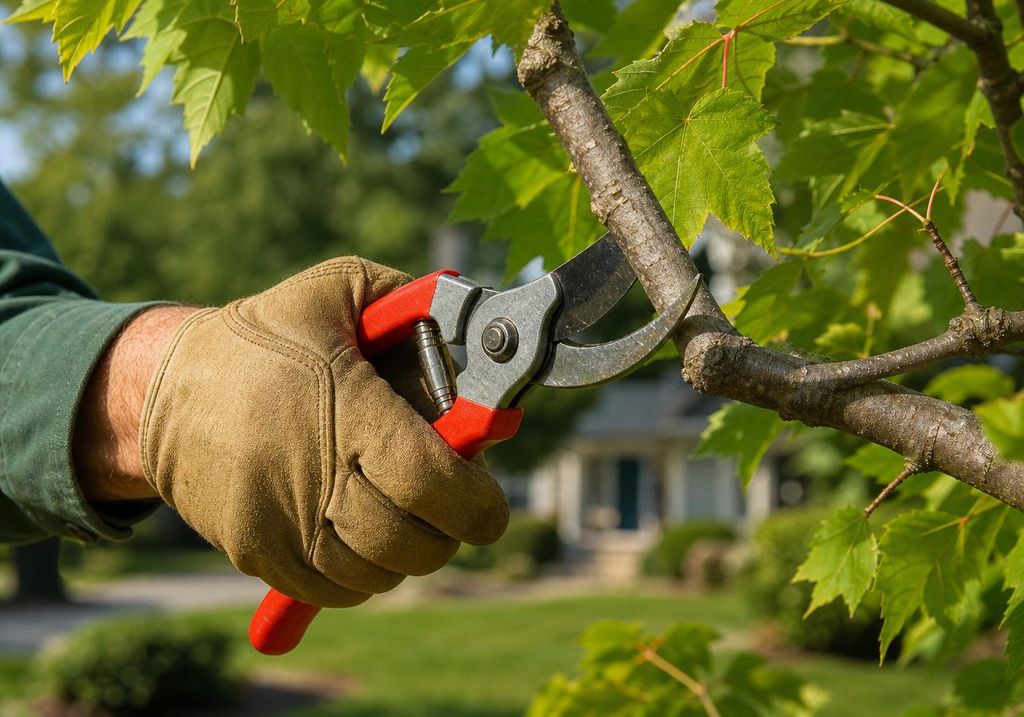
3. Book dormant pruning now. Fall itself is the wrong time for major cuts — healing is slowest and decay fungi are sporulating — but it's exactly the right time to get on the dormant-season calendar, which fills by mid-January. Deadwood and hangers are the exception: those come out whenever they're found.
4. Walk your trees before the ice does. One slow lap with your eyes up: new lean, cracks at the big unions, mushrooms at the base, limbs that died back this summer. Ice season load-tests every one of those defects for days at a time. Anything on the warning-sign list gets a free professional look now, at fall prices, instead of an emergency premium in January.
5. Gutters and downspouts: the ice-dam prevention job
Do this after the last big leaf drop, which around here means November. Packed gutters hold water; held water freezes into ice dams that pry shingles and send meltwater into the wall cavity — a four-figure repair caused by an hour with a ladder or a hundred-dollar service call. Flush the downspouts too, and make sure they discharge feet from the foundation, not onto the future skating rink beside the steps.
6–7. Lawn and beds: set up spring in October
6. The lawn's last month matters most. Final mow a notch lower than summer height (voles tunnel under snow through tall grass), aerate if the ground's compacted, overseed thin spots while soil is still warm, and drop a fall fertilizer — the roots bank it all winter and cash it out in April green-up.
7. Beds and perennials. Cut back what browns, leave what feeds the birds, and top beds with 2–3 inches of mulch after the first hard frost — the point is stopping freeze-thaw heaving, not keeping roots warm. Pull mulch back from trunks and stems; volcano mulching kills more young trees than winter does.
8–10. Stage the winter gear
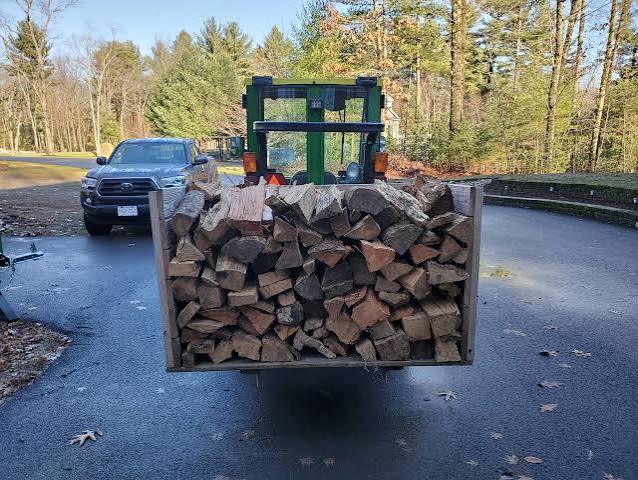
8. Firewood squared away: metered under 20% moisture, stacked off the ground, top covered — the full seasoning-and-species guide is in Getting Your Property Ready for Michigan Winters. 9. Snow plan signed: contracts fill by early November; the DIY / per-push / seasonal math is in the snow removal cost guide. Stake your driveway edges while the ground still takes a stake. 10. Water and equipment: hoses drained and stored, spigots shut off from inside, irrigation blown out, mower fuel stabilized, snowblower started once in October — the carburetor you fix now is the one everyone else discovers during the first storm.
The quick checklist
- ☐ Mulch light leaf drops; clear heavy ones
- ☐ Rake to curb — schedule pickup
- ☐ Book dormant pruning; remove deadwood/hangers now
- ☐ Walk the trees; get warning signs inspected free
- ☐ Gutters & downspouts cleared after final drop
- ☐ Last mow low · aerate · overseed · fall fertilizer
- ☐ Beds cut back & mulched (never against trunks)
- ☐ Firewood metered, stacked, covered
- ☐ Plow contract signed; driveway staked
- ☐ Hoses, irrigation, mower, snowblower winterized
When to DIY and when to call
Honest division of labor: the beds, the mower, the hoses, and the raking are a fine pair of weekends. Hire out the jobs with ladders, saws, or scale — second-story gutters, anything in a tree beyond hand-pruner reach, and bulk leaf hauling where the vacuum rig does in twenty minutes what bagging does in a day. We bundle the yard half — leaf pickup, tree work, and the plow contract — into one fall visit and one quote. Book it before the November rush.
Frequently asked questions
Work in two passes: mid-October for the first leaf drop, gutters, and booking (plow contracts, dormant pruning), then early-to-mid November for the final leaf clear, last mow, and hose shutoff — after the oaks finally let go but before the first sticking snow.
A thin scattering mulched by the mower feeds the lawn. A mat of whole leaves under snow smothers turf and breeds snow mold — the gray dead patches you rake out in April. Clear the heavy drops; mulch the light ones.
Ours is quoted by pile volume — rake to the curb and the vacuum rig does the rest, far cheaper than bagging by the hour. Most residential pickups are a fraction of what a full-service rake-and-haul crew charges.
The ones with ladders, saws, or scale: gutter cleaning on two-story homes, any tree work beyond hand-pruner reach, and bulk leaf removal. The rest — beds, hoses, mower — is a fine weekend list.
Jason leads Diversified Tree Service LLC, an owner-operated, fully-insured crew serving Grand Rapids and West Michigan — 10+ years in business with 25+ years of combined crew experience in tree removal, trimming, and storm response. BBB accredited · 24/7 emergency.