
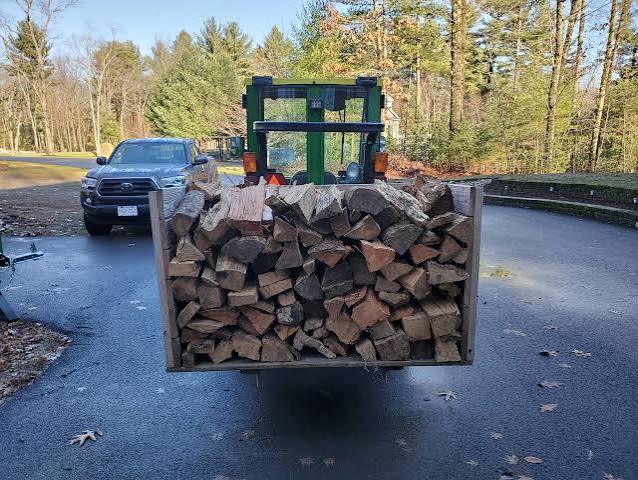
A West Michigan winter is not a surprise. It arrives on schedule every year — lake-effect bands off Lake Michigan, at least one serious ice event, weeks below freezing — and it audits every property honestly: the limb you meant to deal with, the green firewood that smolders instead of burns, the plowing you meant to line up in October. The difference between a hard winter and a miserable one is almost entirely what you do in the eight weeks before it.
This is the whole preparation in one place — trees, firewood, snow, and the fall work that protects all three. It's the guide we wish every customer had read in October instead of calling us in January.
Winterize your trees first — they carry the biggest risk
Everything else on this list costs you comfort; a tree failure costs you a roof. Ice is the great examiner: a half-inch of glaze multiplies a limb's weight severalfold, and every defect that shrugged off summer thunderstorms — the deadwood over the driveway, the cracked union, the over-extended limb above the porch — gets load-tested for a week at a time. Before the first ice: get deadwood and hangers out of the crown, deal with the warning signs you already know about, and remember that late fall into winter is the best pruning window of the year for most species anyway — the work you'd want done in any season is cheapest and cleanest now.
Smaller tasks that punch above their weight: wrap young, thin-barked trees (maples especially) against southwest winter sunscald; mulch root zones 2–3 inches deep, pulled back from the trunk, to buffer the freeze-thaw cycling that heaves new plantings; and water evergreens deeply until the ground actually freezes — winter browning is mostly summer drought collecting its debt.
Firewood: how to tell if it’s properly seasoned
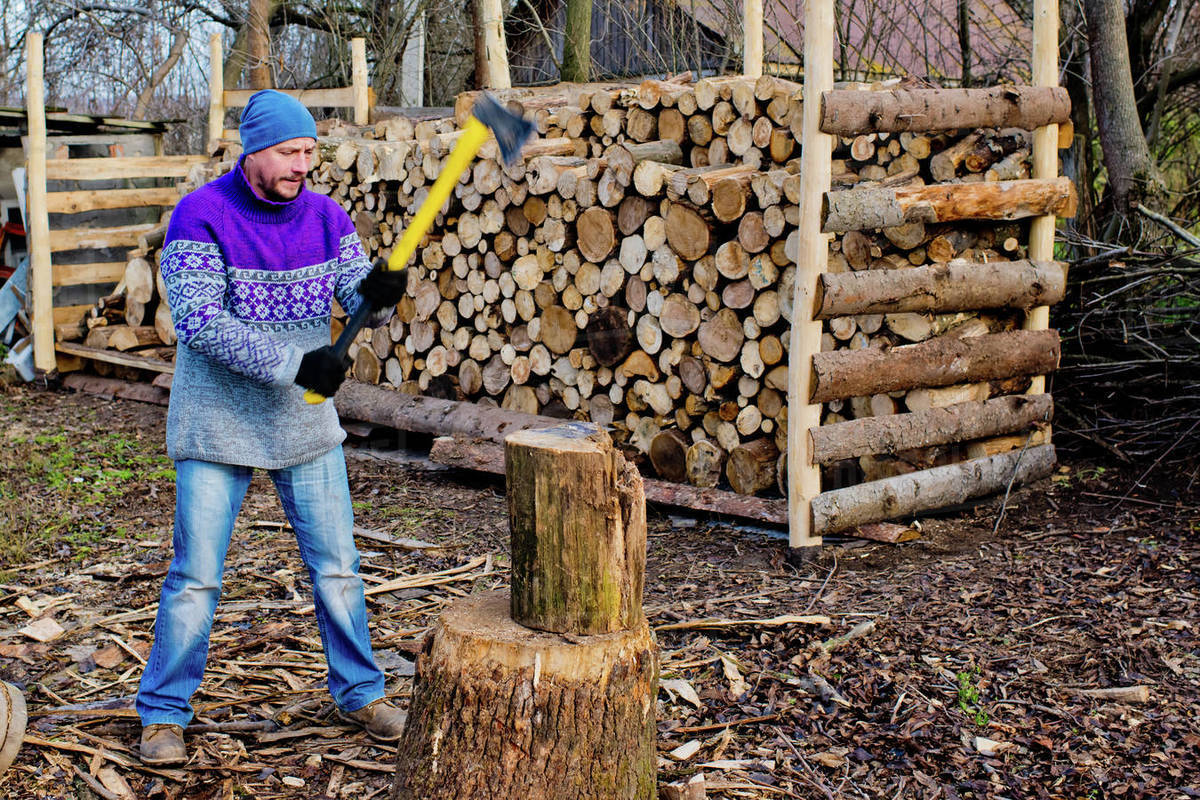
Green wood is the most common winter-prep failure in Michigan, and the most avoidable. Freshly cut hardwood is roughly half water; it doesn't burn so much as boil. The target is moisture below 20%, and the checks take one minute:
- Meter it. A $25 moisture meter on a freshly split face is the definitive answer. Under 20%: burn. Over 25%: stack it for next year.
- Read the ends. Deep radial cracks (checks) in the end grain mean the wood has dried and shrunk.
- Color and bark. Seasoned wood goes gray and dull; bark loosens or falls off in sheets.
- Weight and sound. Dry wood is startlingly light for its size and gives a hollow clunk when two splits knock together — green wood thuds.
- Time. Most hardwoods want 6–12+ months split and stacked; dense oak honestly wants 1–2 years. "Seasoned since spring" oak is a polite fiction.
Why it matters beyond comfort: green wood burns cool and incomplete, and the unburned vapor condenses in your flue as creosote — the fuel of chimney fires. A cord of properly seasoned hardwood gives more heat, a cleaner chimney, and glass you can actually see through. If your stack meters wet in October, buying a seasoned cord now beats fighting wet wood till March; our firewood program sells what the meter approves.
The best hardwood species to burn in Michigan
All BTUs are not equal. Here's the local hierarchy, from a crew that processes most of these species weekly:
Strategy for a real Michigan winter: a mixed stack. Birch and cherry to light and run the shoulder seasons, ash and maple for the daily burn, oak and locust banked for January nights. And a note on the ash: the emerald ash borer killed millions of Michigan trees, but it left behind a decade of superb firewood — most of what we buck from removals goes straight to the seasoning racks.
Storing firewood so it stays seasoned
Seasoning is storage. Off the ground (pallets or rails — ground contact wicks moisture and invites rot), top covered, sides open (a roof over the stack, never a tarp wrapped to the ground, which turns a woodpile into a greenhouse), single rows facing the prevailing westerlies if you have the room, and away from the house — a woodpile against the siding is a carpenter-ant bridge with a welcome mat. Bring in only a few days' supply at a time; the bugs wake up indoors.
Snow and ice readiness
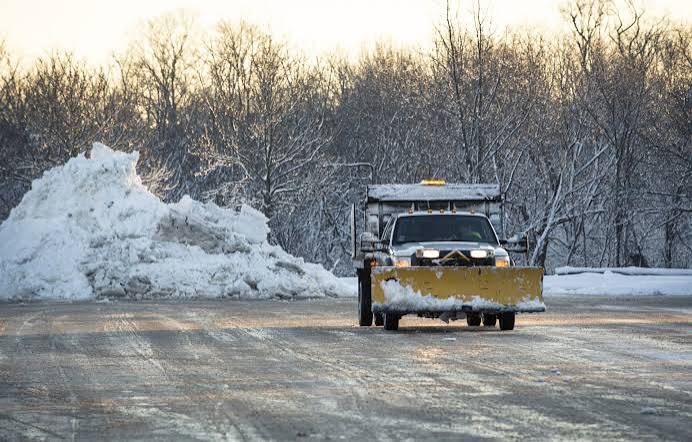
Grand Rapids averages 75+ inches a season, and it arrives in lake-effect bursts that bury a driveway overnight. The preparation is mostly administrative, which is why it gets skipped: line up plowing before the first storm — seasonal contracts and route spots fill by early November, and the full DIY / per-push / seasonal math is in our snow removal cost guide. Then the physical list: mark the driveway edges with stakes before the ground freezes (your lawn and our plows both thank you), clear drainage paths so meltwater doesn't become a skating rink at the apron, stage the salt/sand where you'll actually use it, and service the snowblower in October, not during the first storm alongside everyone else in Kent County.
The fall cleanup that prevents winter damage
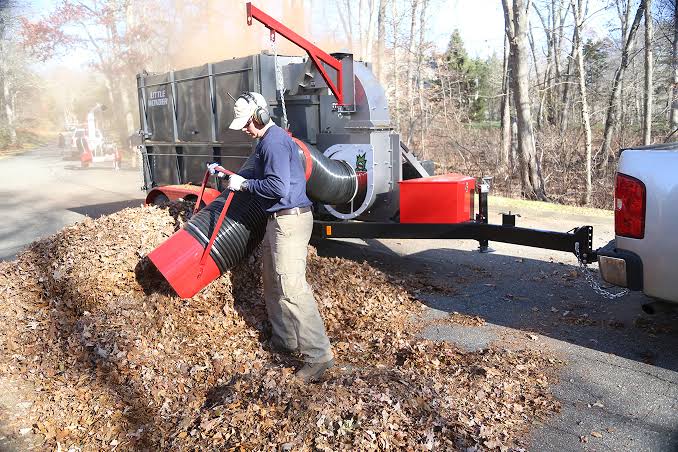
The unglamorous work that makes spring cheaper: leaves off the lawn before snow mats them into smothering mold blankets (our curbside pickup exists for exactly this), gutters and downspouts clear so meltwater drains instead of building ice dams, hoses drained and spigots shut, and the mower's last cut a notch lower to discourage voles tunneling under the snow. The complete step-by-step — including the tree and firewood items above — is the fall cleanup checklist.
The quick pre-winter checklist
- ☐ Trees inspected; deadwood, hangers, and known hazards handled
- ☐ Young trees wrapped; root zones mulched; evergreens watered deep
- ☐ Firewood metered under 20% — or a seasoned cord ordered and stacked
- ☐ Stack off the ground, top-covered, away from the house
- ☐ Plowing contract signed; driveway edges staked
- ☐ Gutters clear, hoses drained, drainage paths open
- ☐ Snowblower serviced; salt and shovels staged
Work the list in October and winter becomes weather instead of an emergency. Want the tree items handled in one visit? Book a free walk-through — we'll triage the crown work, quote the firewood, and get you on the plow route in a single stop.
Frequently asked questions
Check for moisture under 20% with a $25 moisture meter on a fresh split face — or use the field tells: deep end cracks, gray dull color, loose bark, noticeably light weight, and a hollow "clunk" (not a thud) when two pieces knock together. Hardwoods need 6–12+ months split and stacked; oak often wants 1–2 years.
Oak, sugar maple, hickory, and black locust top the heat charts; ash is the workhorse — abundant (EAB-killed), easy to split, and dries fast. Birch and cherry burn quicker but light easily and smell great. Skip softwoods like pine indoors: fast, cool burns and more creosote.
Before the first storm — October is ideal. Seasonal contracts fill by early November, and the first big lake-effect event every year creates a waiting list. Same story for dormant pruning: the winter calendar books by mid-January.
It’s the best time for most species — full dormancy, visible structure, frozen ground protecting the lawn, and no disease pressure. See our seasonal trimming guide for the species-by-species calendar.
Jason leads Diversified Tree Service LLC, an owner-operated, fully-insured crew serving Grand Rapids and West Michigan — 10+ years in business with 25+ years of combined crew experience in tree removal, trimming, and storm response. BBB accredited · 24/7 emergency.